
Through good(?) fortune I discovered to my surprise that I was in Pret a Manger at about 8:30 this morning. It's actually embarassingly serene in there - like a nestling cocoon/halfway house between a commuter train and a cafe. People still want to do cafe-chat but they're considerate enough to note that people are still coaxing themselves out of sleep, not yet ready to enter the office proper, and so what you get is the hushed friendliness of intimacy. A loveliness I might go out of my way to experience again.
Anyway, what's interesting to consider is that these people were the same mix of businessmen, arty types &c. as at lunchtime - but with a different mindset. And some pret boffins have obviously worked out that this engenders different needs. Indeed, some people have very specific needs that early in the morning. So I was quite surprised and delighted when, before even picking anything, I was asked "any coffee?". I hate coffee. But this proactive approach was nice, and probably comes as a great comfort to monosyllabic dawn treaders who need only grunt their approval.
To ask that at lunch would waste time and annoy. To ask it in the morning lets the customer (most of them) know that they are understood, and extends a hidden hand of comradeship in the morning battle.
Conversely, I'm told (maybe it was Fast Food Nation that Fast Food places play high-tempo music at rush out to tweak people's subconscious in making them eat fast & get out. You might see that as evil. I don't know - maybe it's that same thing, knowing what people probably want at a given time, and facilitating it.
All I'm trying to say is this: people are different creatures at different times, in different places. So,talk to them in a way that acknowledges their current state. Interpersonal experts tell us to try and 'mood match' with our conversation partner, then you can steer the conversation your way.
Of course, perhaps the really clever-dick thing is to subvert that idea in a way that gives people relief from a routine they may not like. I like to think that the success of the first T-Mobile flashmob (and its ImprovEverywhere predecessors, yes) lies not just in its novelty, but also that it takes place at a train station - friendship and belonging, at the ultimate symbol of Gesselschaft:
Showing posts with label levers. Show all posts
Showing posts with label levers. Show all posts
Friday, 14 August 2009

Wednesday, 5 August 2009
Aspiration vs the pursuit of Perfection
Liberal Democrat MP Jo Swinson wants to ban what's still colloquially called 'airbrushing' in children's advertising. If only it was as romantic as that any more, and not just a bunch of guys playing around on Quark and rework reality in about four minutes.
The main reason is, obviously, the generation of unrealistic body images in young girls. Naturally, plenty of parts of the ad industry (beauty anyone?) would rather keep up these shenanigans. What this difference of opinion comes from is two different notions of what happens in the mind when you see something like this:

(That's Twiggy. She's 59!)
1: Wow, she's pretty. Maybe if I buy these products I can look pretty too?
2: Oh god, I'll never be as beautiful as that. I hate myself.
The question of how much a shot of aspirational marketing causes one vs. the other is a classic, thorny one. Because while we want to sell more of x, we'd like to think that we're not actually damaging people in the process. Indeed, at its best advertising both sells product and as a side effect, makes you smile, makes you see the world in a different light, or makes a certain part of the world swim into sharp focus just for a second.
Smart brands/advertisers realised that making the target feel bad while selling to them is generally a bad idea, some time ago. And that saying "here's a sense of inadequacy, now buy our thing," is not the best proposition. How to have your cake and eat it? Invert the debate, as Dove did. Of course, starting anything with "Campaign For-" is always a bonus.
Or, you can subvert the debate. The thing is, it is advertising's job and modus operandi to present a somewhat altered notion of reality. Meerkats don't talk. Lynx won't get you laid. Dentists don't develop toothbrushes with the aid of Star Trek-esque holodeck programs. So why not do something utterly ludicrous with your photoshop wizardry? Make your models look like animals, like aliens, like each other? No.17 (I think it was) did a makeup competition via MySpace a few years back. Why not do a photoshopping competition, to get teens wise to the practice? When Adobe were asked to comment on the airbrushing story, they hit back nicely:
"we encourage the advertising community to apply good judgement and use these tools responsibly, and we are glad that the increasingly broad availability of digital imaging tools makes it possible for even children to understand that the photos they see in magazines may easily have been manipulated."
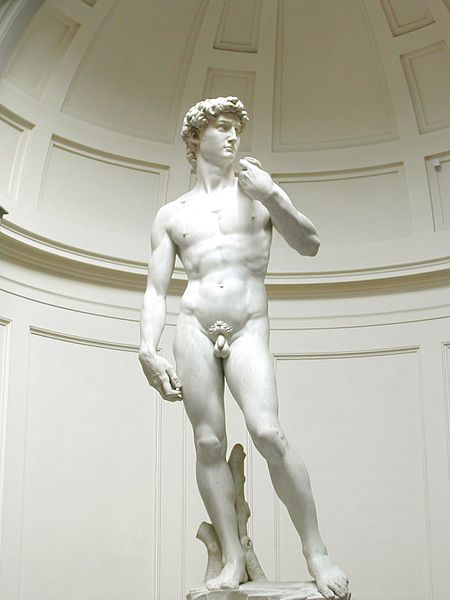
And it's true. As long as there's been media or a creative process of any sort (just look at the way Michaelangelo's David is done in accordance with the classical Golden Mean), there has been idealisation. And that it has become more public, more unabashed, can only be a good thing - as long as we treat the process with the incredulity it deserves.

The main reason is, obviously, the generation of unrealistic body images in young girls. Naturally, plenty of parts of the ad industry (beauty anyone?) would rather keep up these shenanigans. What this difference of opinion comes from is two different notions of what happens in the mind when you see something like this:

(That's Twiggy. She's 59!)
1: Wow, she's pretty. Maybe if I buy these products I can look pretty too?
2: Oh god, I'll never be as beautiful as that. I hate myself.
The question of how much a shot of aspirational marketing causes one vs. the other is a classic, thorny one. Because while we want to sell more of x, we'd like to think that we're not actually damaging people in the process. Indeed, at its best advertising both sells product and as a side effect, makes you smile, makes you see the world in a different light, or makes a certain part of the world swim into sharp focus just for a second.
Smart brands/advertisers realised that making the target feel bad while selling to them is generally a bad idea, some time ago. And that saying "here's a sense of inadequacy, now buy our thing," is not the best proposition. How to have your cake and eat it? Invert the debate, as Dove did. Of course, starting anything with "Campaign For-" is always a bonus.
Or, you can subvert the debate. The thing is, it is advertising's job and modus operandi to present a somewhat altered notion of reality. Meerkats don't talk. Lynx won't get you laid. Dentists don't develop toothbrushes with the aid of Star Trek-esque holodeck programs. So why not do something utterly ludicrous with your photoshop wizardry? Make your models look like animals, like aliens, like each other? No.17 (I think it was) did a makeup competition via MySpace a few years back. Why not do a photoshopping competition, to get teens wise to the practice? When Adobe were asked to comment on the airbrushing story, they hit back nicely:
"we encourage the advertising community to apply good judgement and use these tools responsibly, and we are glad that the increasingly broad availability of digital imaging tools makes it possible for even children to understand that the photos they see in magazines may easily have been manipulated."
And it's true. As long as there's been media or a creative process of any sort (just look at the way Michaelangelo's David is done in accordance with the classical Golden Mean), there has been idealisation. And that it has become more public, more unabashed, can only be a good thing - as long as we treat the process with the incredulity it deserves.
Subscribe to:
Posts (Atom)

 Posts

